
From Ottomans to Republic
From the establishment of the Ottoman State to the Republic of Turkey, beginning with the emergence of the Ottoman Empire after the end of the Middle Ages, it played a historically significant role, marked by achievements such as the founding of a border principality in Anatolia, western Asia Minor, by Sultan Osman I, son of Ertuğrul Osman. This period was followed by a period of tremendous expansion, during which the empire stretched across Asia, Europe, and Africa.
From Ottomans to Republic
From the establishment of the Ottoman State to the Republic of Turkey, beginning with the emergence of the Ottoman Empire after the end of the Middle Ages, it played a historically significant role, marked by achievements such as the founding of a border principality in Anatolia, western Asia Minor, by Sultan Osman I, son of Ertuğrul Osman.
This period was followed by a period of tremendous expansion, during which the empire stretched across Asia, Europe, and Africa
The Ottoman Empire (1299-1922) flourished with immense power and prosperity, starting from the principality established by Sultan Osman I.
Furthermore, successive sultans shaped the empire through construction, conquests, reforms, and challenges, culminating in the reign of Sultan Mehmed VI, which ended with the abolition of the sultanate.
Over 624 years, the Ottoman Empire grew from a small principality in Anatolia into one of the greatest empires in history. Its rulers left an indelible mark on politics, the military, and the arts.
Each era contributed to the empire’s trajectory, from Selim I’s decisive victories at Chaldiran and his expansion into Egypt and the Levant, to the golden age of Suleiman the Magnificent, which witnessed a flourishing of law, architecture, and culture.
The long succession of sultans—from Selim II and Murad III to Abdul Hamid II and Mehmed V—embodies the empire’s resilience and struggle, balancing reform with tradition.
Their reigns reveal the complexity of Ottoman rule and the empire’s enduring influence across continents. With the abolition of the Caliphate in 1924, a new chapter began.
The Republic of Turkey was proclaimed in 1923, heralding an era of modernization, development, and technological advancement.
Drawing on loyalty and a rich cultural heritage, Turkey
has built a self-sufficient economy and strong international relations.
Its trajectory, from the Ottoman legacy to the Republic, rests on a solid historical foundation and a dynamic interaction between its people and government.
Today, Turkey continues its progress with brilliance and prosperity, combining its rich heritage with innovation and global engagement under contemporary leadership.
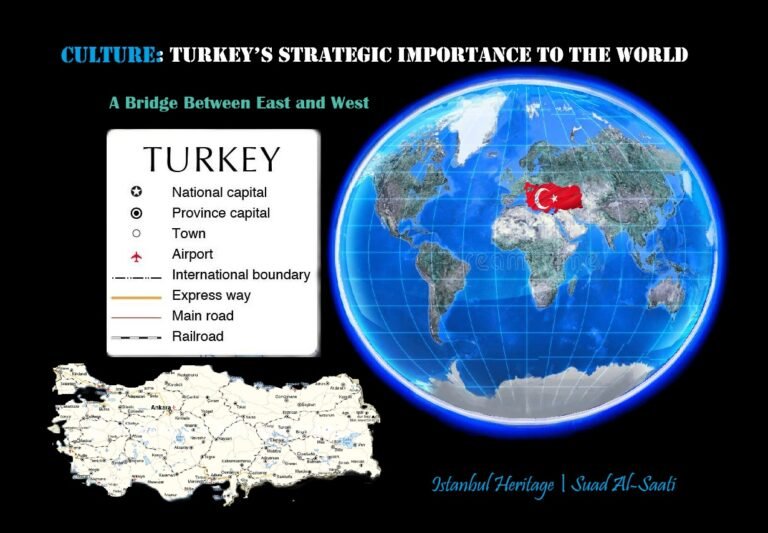
This continuity underscores the interconnectedness of the nation’s past and present, shaping its role as a bridge between East and West.
In addition to technological, scientific, and urban development that has resonated globally in terms of connecting with the modern world and attracting tourists from all corners of the globe.
Immortal Figures
Dates of the Ottoman Sultans
The Ottoman Sultans
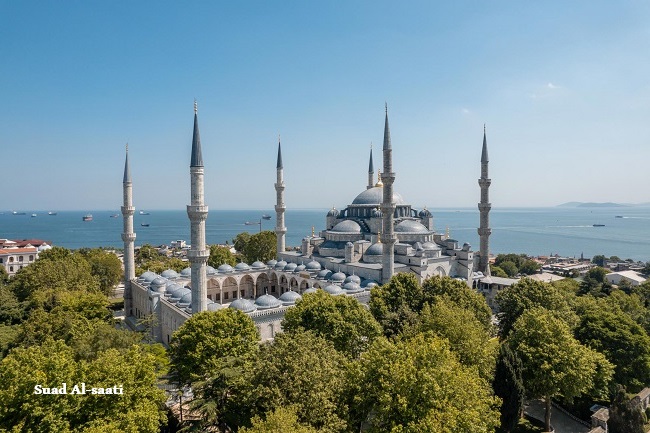
The Sultan Ahmed Mosque in the Fatih District of Istanbul
Istanbul Dolmabahçe Palace Museum
Architect Sinan, Ottoman architecture
Suleiman the Magnificent
Muhammad al-Fatih
Mustafa Kemal Atatürk
Mimar Sinan
Istanbul Pioneers
Osman Hamdi Bey
Sezen Aksu
Türkan Şoray
Nazım Hikmet
Barış Manço
Zeki Müren
Orhan Pamuk
Ara Güle
Heart of Istanbul
Side view of Istanbul
Technology in Istanbul
The Center of Eurasian Interaction
Istanbul: The Center of Eurasian Interaction
Market heart
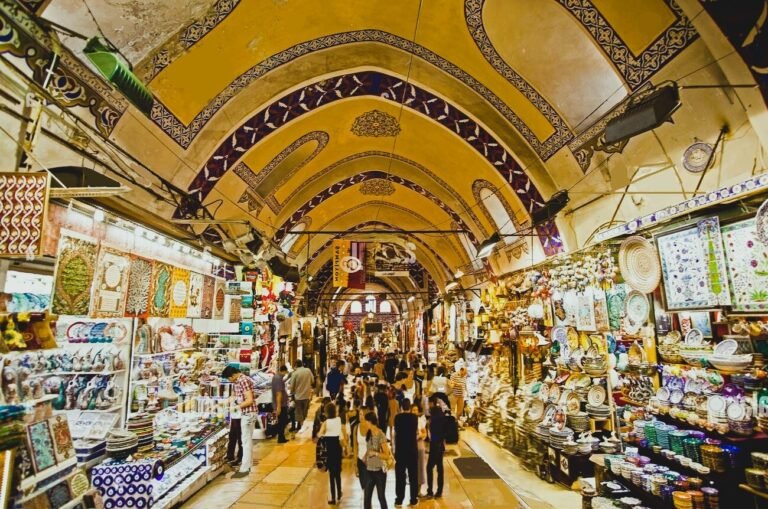
The Grand Bazaar and the Egyptian
In the heart of the Grand Bazaar in Istanbul
Laleli Market