
Istanbul Dolmabahçe Palace Museum
Dolmabahçe Palace stands as one of the Ottoman Empire’s most iconic residences, blending European architectural elegance with imperial symbolism. Built under Sultan Abdulmejid I, it became the administrative and ceremonial heart of the empire between 1856 and 1922, reflecting a transformative era in Istanbul’s cultural and political history.
Istanbul Dolmabahçe Palace Museum
Residence of the Ottoman Sultans
Firstly, Dolmabahçe Palace was the main residence of the Ottoman sultans between 1856 and 1922. It is also an architectural masterpiece on the banks of the Bosphorus, reflecting the evolving cultural aspirations of the empire.
Construction and Architectural Vision
Furthermore, Construction of the palace began in 1843 by order of Sultan Abdulmejid I and was completed in 1856. The palace represented a qualitative leap in architectural design, thus combining the aesthetics of European architecture with Ottoman identity, marking a turning point in imperial design.
Administrative and Royal Center
Moreover, from the moment of its opening, Dolmabahçe became the administrative and ceremonial heart of the empire. However, the court later temporarily moved to Yıldız Palace before Dolmabahçe resumed its central role between 1909 and 1922.
A Symbol of Modernization
Today, the palace reflects a unique visual language shaped by the empire’s desire to modernize while preserving its cultural essence. As a result, it stands not only as a historical monument but also as a narrative of transformation, identity, and political change.
A Turning Point in Ottoman History
In addition, the Dolmabahçe Palace Museum represents a pivotal chapter in the final century of the Ottoman Empire. So as, built between 1843 and 1856 during the reign of Sultan Abdulmejid I, the palace served as the principal administrative and royal residence of the empire. Furthermore, it symbolized a decisive shift towards modernization while preserving a firmly established imperial identity.
Architectural Language and European Influence
In addition, the palace overlooks the Bosphorus Strait and blends elements of European Neoclassical and Baroque architecture with the aesthetics of traditional Ottoman architecture. So as, this architectural fusion has created a visual language that reflects the cultural aspirations and political ambitions of that era.
A Living Archive of Transformation
Today, Dolmabahçe stands not only as a museum but also as a living archive of political transformation and artistic ambition. As a result, it embodies the evolving identity of Istanbul and the empire’s final attempts to redefine itself in a rapidly changing world.
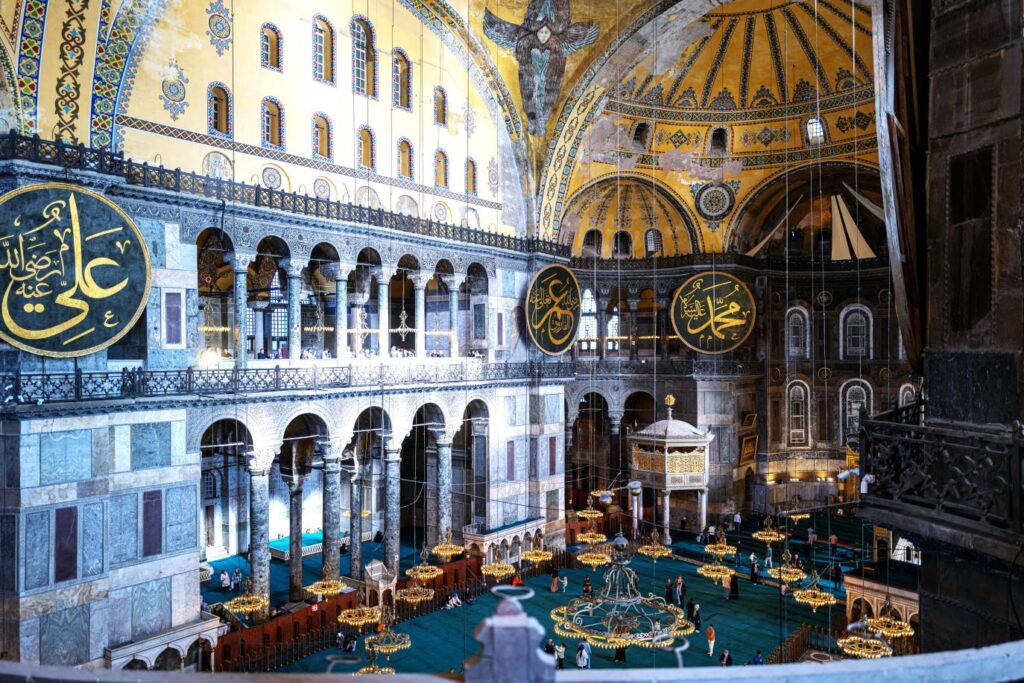
Inside the halls of Dolmabahçe Palace, chandeliers twinkle like hanging stars, while the walls whisper timeless tales of the sultans on the banks of the Bosphorus. (Photo: Andreas Wilguni – Free use)