
The Ottoman Sultans
The Ottoman Sultans
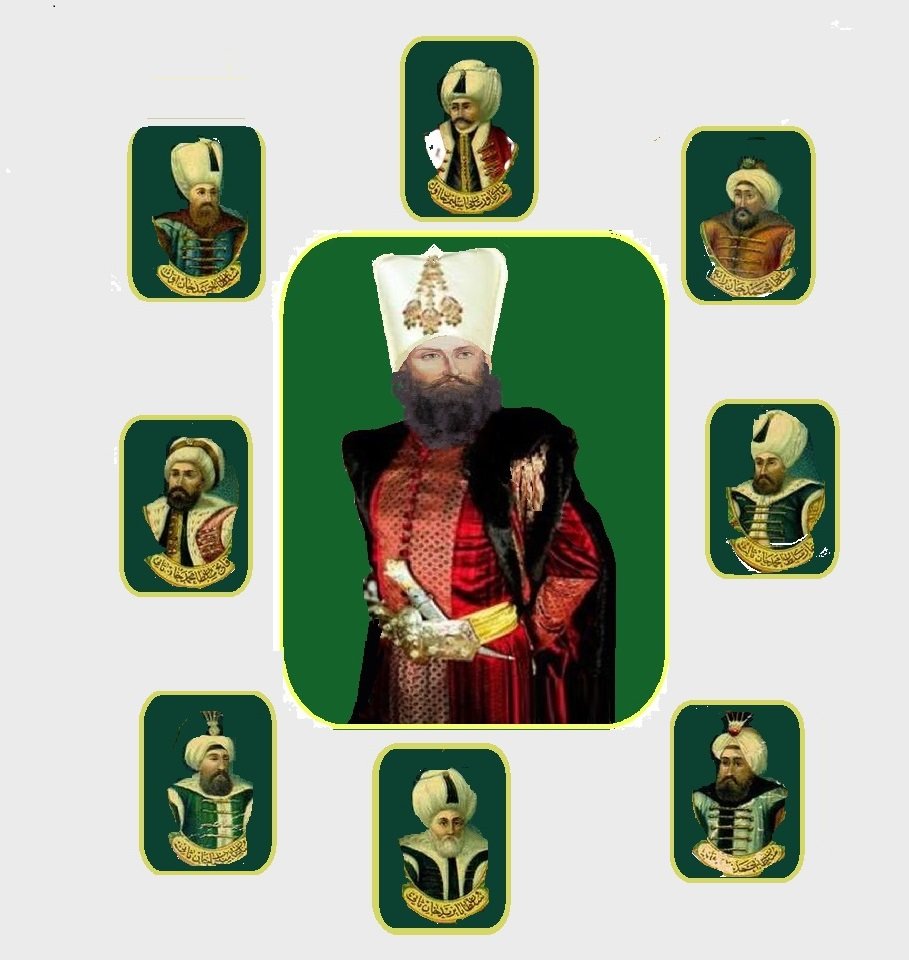
The Ottoman Empire spanned more than six centuries, from its beginnings as a small principality in Anatolia to becoming one of the greatest empires in history.
Its sultans left their mark on politics, the military, and the arts, and their reigns were characterized by great conquests, administrative reforms, and internal and external challenges. A study of the Ottoman sultans reveals how the empire was formed and how each sultan’s rule influenced its historical trajectory.
Ottoman history emerged alongside the events of that era, highlighting its most prominent figures. Here are some of the most influential
Osman I (1299-1324)🧭: Founder, the beginning of the principality and its transformation into a state
Selim I (1512-1520)🧭: Significant expansions, annexation of Syria and Egypt, the beginning of the Ottoman Caliphate
Suleiman the Magnificent (1520-1566)🧭: The zenith of military and political power, legal and cultural reforms
Abdul Hamid II (1876-1909)🧭: A period of reforms and European pressures, complex domestic and foreign policies
Mehmed VI (1918-1922)🧭: The last sultan, the end of the sultanate and the beginning of the Turkish Republic
Selim I: (1512-1520)
Sultan Selim I (1512–1520) brought about a significant transformation in the Ottoman Empire.
His reign marked the expansion of Ottoman influence into the Arab East, most notably through his victory over the Safavids at the Battle of Chaldiran in 1514.
Selim also conquered Egypt and the Levant, defeating the Mamluks between 1516 and 1517. With these conquests, the Ottomans assumed the leadership of the Islamic world, as the caliphate was transferred to the Ottoman sultans, making Selim I one of the most pivotal rulers in Ottoman history
Sultan Abdul Hamid II (1876–1909)
Sultan Abdul Hamid II (1876–1909) ruled during one of the most turbulent periods in Ottoman history.
His reign was marked by strenuous efforts to preserve the empire in the face of mounting European pressure and internal challenges. Abdul Hamid implemented administrative and educational reforms, expanded the railway network, and encouraged modernization projects, including the famous Hejaz Railway. At the same time, he adopted a centralized, often autocratic, style of governance, earning him the nickname “The Red Sultan” among his critics. He emphasized Islamic unity, seeking to unite Muslims under Ottoman leadership as a counterweight to Western influence. Despite his attempts to strengthen the empire, Abdul Hamid faced rising nationalist movements and political opposition, which ultimately led to his deposition in 1909. His reign reflects both the resilience and the struggles of the late Ottoman Empire.
Suleiman the Magnificent: (1520-1566)
Sultan Suleiman the Magnificent (1520–1566) is remembered as one of the most influential rulers in Ottoman history.
His reign marked the peak of the empire’s territorial expansion, extending from Central Europe to the Middle East and North Africa. Suleiman led successful campaigns against Hungary and secured Ottoman dominance in the Mediterranean. Beyond his military achievements, he became known as “the Lawgiver” for his comprehensive legal reforms, which organized the empire’s administration and strengthened justice. His patronage of architecture, literature, and the arts left a lasting cultural legacy, symbolized by monumental works such as the Süleymaniye Mosque in Istanbul. Suleiman’s era combined military power, legal innovation, and cultural flourishing, making his reign the golden age of the Ottoman Empire.
Selim II: (1566-1574)
Murad III: (1574-1595)
Mehmed III: (1595-1603)
Ahmed I: (1603-1617)
Mustafa I: (1617-1618)
Osman II: (1618-1622)
Mustafa I: (1622-1623) (Second Reign)
Murad IV: (1623-1640)
Ibrahim I: (1640-1648)
Mehmed IV: (1648-1687)
Suleiman II: (1687-1691)
Ahmed II: (1691-1695)
Mustafa II: (1695-1703)
Ahmed III: (1703-1730)
Mahmud I: (1730-1754)
Osman III: (1754-1757)
Mustafa III: (1757-1774)
Abdul Hamid I: (1774-1789)
Selim III: (1789-1807)
Mustafa IV: (1807-1808)
Mahmud II: (1808-1839)
Abdulmejid I: (1839-1861)
Abdulaziz I: (1861-1876)
Murad V: (1876)
Abdul Hamid II: (1876-1909)
Mehmed V: (1909-1918)
Sultan Mehmed VI (1918–1922)
Sultan Mehmed VI (1918–1922) was the last ruler of the Ottoman Empire, presiding over its final years before the abolition of the sultanate. His reign came at a turbulent time, following the empire’s defeat in World War I and the signing of the Treaty of Sèvres in 1920, which imposed harsh terms and dismantled much of the Ottoman Empire’s territory. Mehmed VI faced a growing nationalist movement led by Mustafa Kemal Atatürk, who opposed foreign occupation and sought to establish a new Turkish republic. Unable to resist the tide of change, Mehmed VI was deposed in 1922 and exiled, marking the end of more than six centuries of Ottoman rule. His reign symbolizes the final chapter of the empire and the transition to modern Türkiye.
In conclusion
The history of the Ottoman sultans reflects the rise, zenith, and decline of one of the world’s greatest empires. From Osman I, who laid the foundations of the principality, to Selim I, who expanded its borders and established the caliphate, to Suleiman the Magnificent, who led the empire to its golden age, each ruler left a distinct mark on its trajectory. Later sultans, such as Abdul Hamid II, struggled to preserve the empire in the face of modern challenges, while Mehmed VI witnessed its final disintegration. Their reigns collectively demonstrate how leadership, reform, and external pressures shaped the fate of the Ottoman state. The legacy of the sultans continues to influence modern Turkey and the wider Muslim world, reminding us that the story of empire is not merely one of power and conquest, but also one of resilience, transformation, and cultural heritage.
Immortal Figures
Dates of the Ottoman Sultans
The Ottoman Sultans
The Sultan Ahmed Mosque in the Fatih District of Istanbul
Istanbul Dolmabahçe Palace Museum
Architect Sinan, Ottoman architecture
Suleiman the Magnificent
Muhammad al-Fatih
Mustafa Kemal Atatürk
Mimar Sinan
Istanbul Pioneers
Osman Hamdi Bey
Sezen Aksu
Türkan Şoray
Nazım Hikmet
Barış Manço
Zeki Müren
Orhan Pamuk
Ara Güle
Heart of Istanbul
Side view of Istanbul
Technology in Istanbul
The Center of Eurasian Interaction
Istanbul: The Center of Eurasian Interaction
Market heart
The Grand Bazaar and the Egyptian
In the heart of the Grand Bazaar in Istanbul
Laleli Market