Architect Sinan – Genius of Ottoman Architecture and Maker of Istanbul’s Features
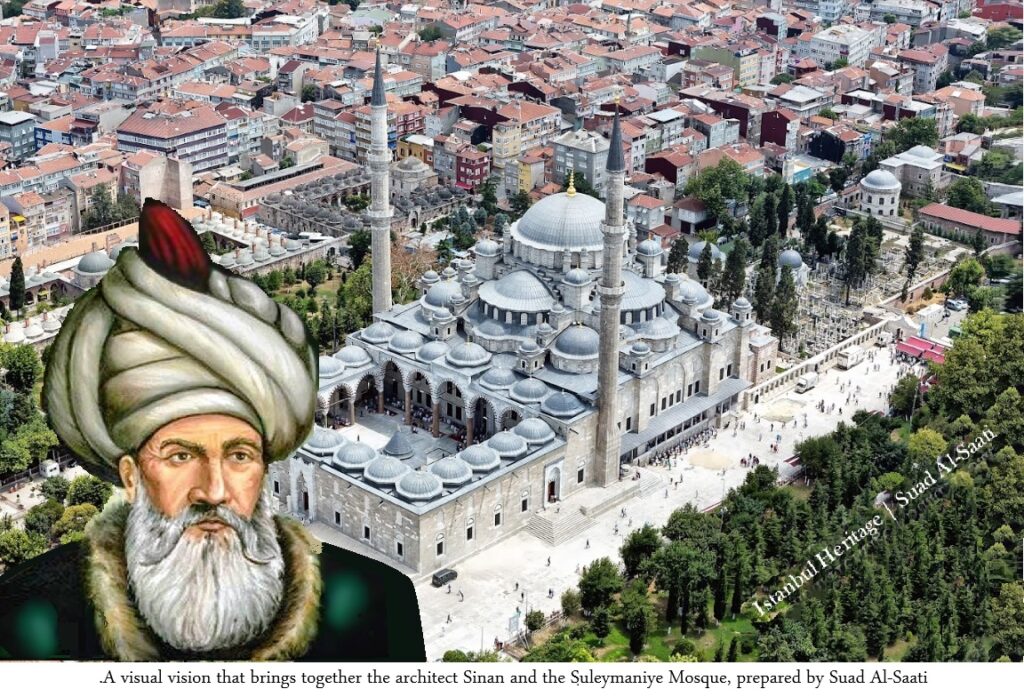
Before delving into the details of architect Sinan’s life and works, consider this poster that combines his image with the Süleymaniye Mosque, succinctly showcasing the hallmarks of his architectural genius. It’s a visual introduction that encapsulates what we will discover together: how this man became the architectural soul of Istanbul.
The architect Sinan is considered one of the greatest architects in the history of Islamic and Ottoman architecture and is regarded as one of the most prominent architects in the world throughout the ages.
He left an indelible mark on Istanbul, shaping its urban landscape, constructing its grand landmarks, and establishing the foundations of an architectural school that is still studied today.
Understanding the history of Istanbul is incomplete without considering the legacy of this genius who lived in the 16th century and whose name is closely associated with the reign of Sultan Suleiman the Magnificent.
First: A brief historical background
Sinan was born in 1489 in Kayseri and joined the Janissary corps, where his talent for engineering and construction became evident during military campaigns.
Thanks to his exceptional skills, he was appointed Chief Architect of the Ottoman Empire, a prestigious position that enabled him to oversee massive projects in Istanbul and beyond.
Secondly: His role in shaping Istanbul’s architectural identity
Building large mosques
Sinan excelled in designing mosques that became symbols of the city, most notably:
Among the most prominent are:
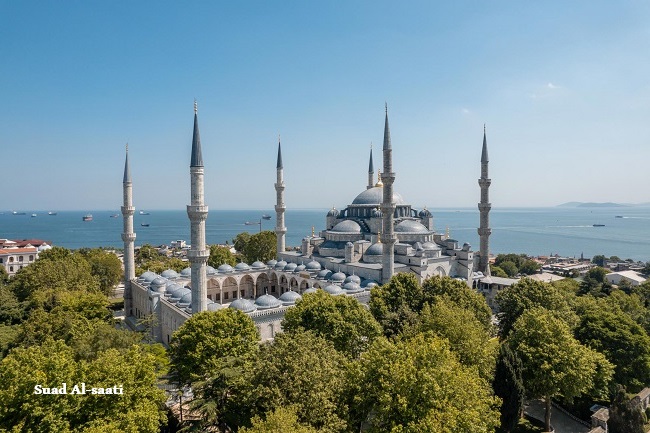
The Sulaymaniyah Mosque: An architectural masterpiece representing the pinnacle of Ottoman art.
In addition, there is also the Sehzade Mosque: One of the most beautiful mosques with its multiple domes.
The Rüstem Pasha Mosque: Famous for its unique ceramic decorations.
These mosques were not merely places of worship, but also cultural, social, and educational centers.
Third: His architectural philosophy
The balance between beauty and function
Sinan believed that architecture should combine
Visual harmony
Engineering strength
Inner comfort
Natural lighting
Ideal sound insulation
Innovation in domes and minarets
Sinan developed new techniques in:
Load distribution
Construction of massive domes
Design of slender minarets
Using light to create an interior spirituality
These innovations made his mosques appear light despite their grandeur.
Fourth: His activities outside of mosques
Bridges
Sinan built bridges based on what could exist, such as
Büyükçekmece Bridge
Malasada Bridge
Bathrooms and schools
He designed luxurious Ottoman baths, schools, caravanserais, and markets, which contributed to the development of daily life in Istanbul.
Fifth: His legacy and influence on Ottoman architecture
A complete architectural school
Sinan founded an architectural school that influenced:
His students
The architects who came after him
The development of Ottoman architecture in later centuries
Its impact on modern Istanbul
His influence remains evident in
The city’s skyline
Its minarets
And its domes
So, Its unique architectural style
Istanbul today is a quintessential Sinan city.
Ultimately, he was not merely an architect, but an artist, thinker, and innovator who redefined Ottoman architecture and left an enduring legacy in Istanbul.
His works testify to his genius and are an integral part of the city’s identity—a blend of history, beauty, and spirituality.